Revenue + Retention
Mastermind groups
Small peer rooms for committed members: accountability, private discussion, shared files, join requests, group votes, and fewer people silently nodding in the giant room.

Free forever. No credit card. No boring stuff.
Why it exists
Give serious members a smaller table where they actually have to show up.
Mastermind groups create a private layer for members who need focused peer feedback, accountability, shared resources, and a contained discussion space around a specific goal.
They are not coaching with a different hat. The center of gravity is the group: members compare notes, ask sharper questions, approve new people, vote on group decisions, and hold each other to the work.
For owners, masterminds are a clean way to support premium cohorts, advanced circles, local chapters, project teams, accountability pods, or any smaller group that needs more trust than the main floor can provide.
Masterminds, decoded
What is a mastermind?
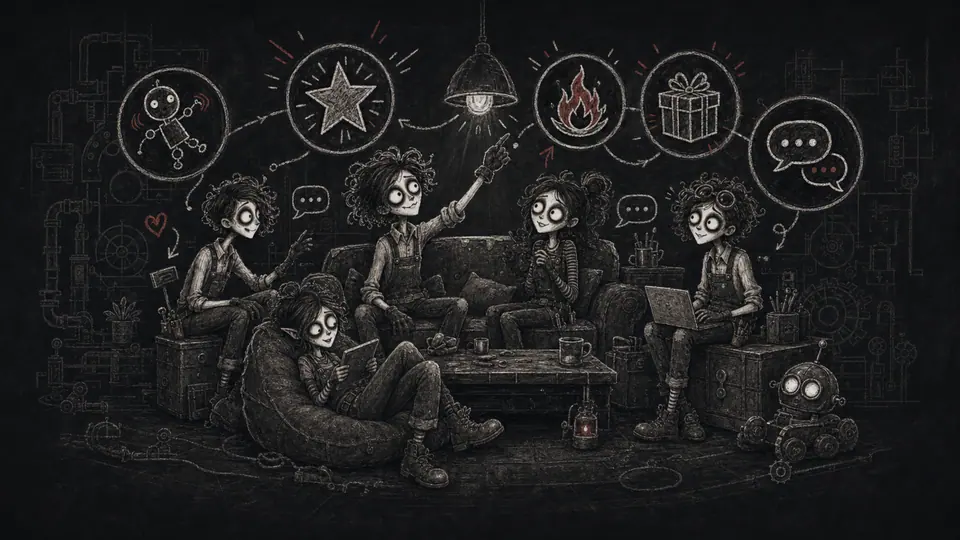
A mastermind is a small, focused peer group inside the Factory. In FanaticFactory, the sweet spot is six to eight people gathered around a goal, project, challenge, cohort, or shared level of seriousness. Think less "broadcast from the expert" and more "the right people around the table, now everybody has to bring something useful."
- Six to eight people
The product caps groups at eight because accountability gets mushy once the room turns into an audience.
- Self-organizing
Members can create a group, define the focus, set expectations, request to join, and let the current group vote people in when the fit is right.
- Owner-managed
Factory owners can seed, assign, or curate cohorts when the group should be a premium room, local chapter, challenge team, office-hours pod, or serious accountability table.
- Peer accountability
The value is not another admin broadcasting advice; it is members bringing updates, questions, decisions, and receipts to people who will notice if they vanish.
- Built-in governance
Join requests, approvals, settings changes, blocked members, and deletion decisions can move through votes instead of becoming one long awkward DM thread.
- Private work room
Each mastermind can have its own discussion space and downloads, so notes, prompts, files, and decisions stay out of the public floor.
- Revenue lever
Owners can make masterminds part of a higher-commitment offer: fewer seats, more serious members, clearer outcomes, and less "I joined but did nothing" energy.
Blueprints
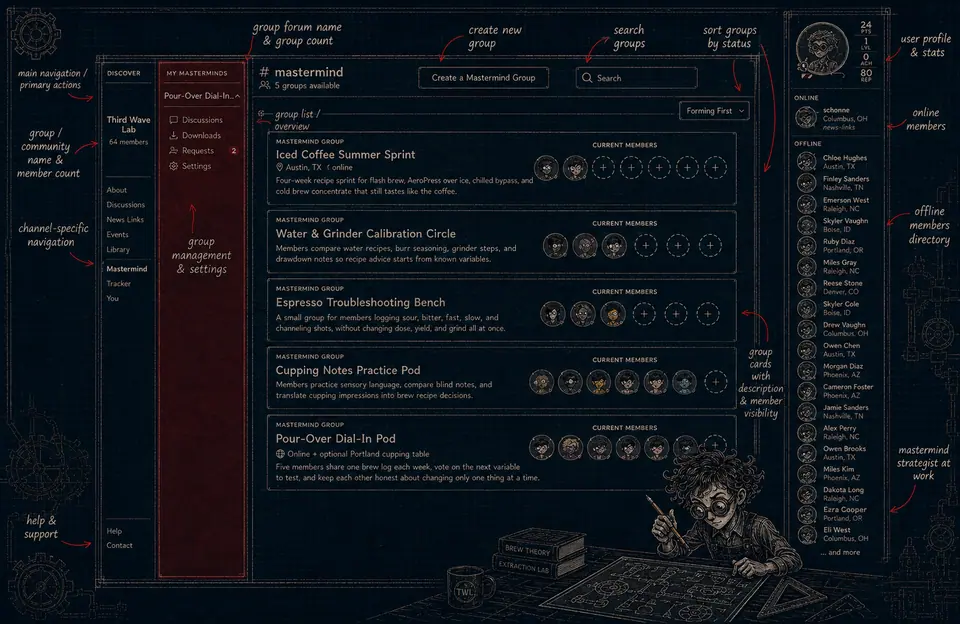
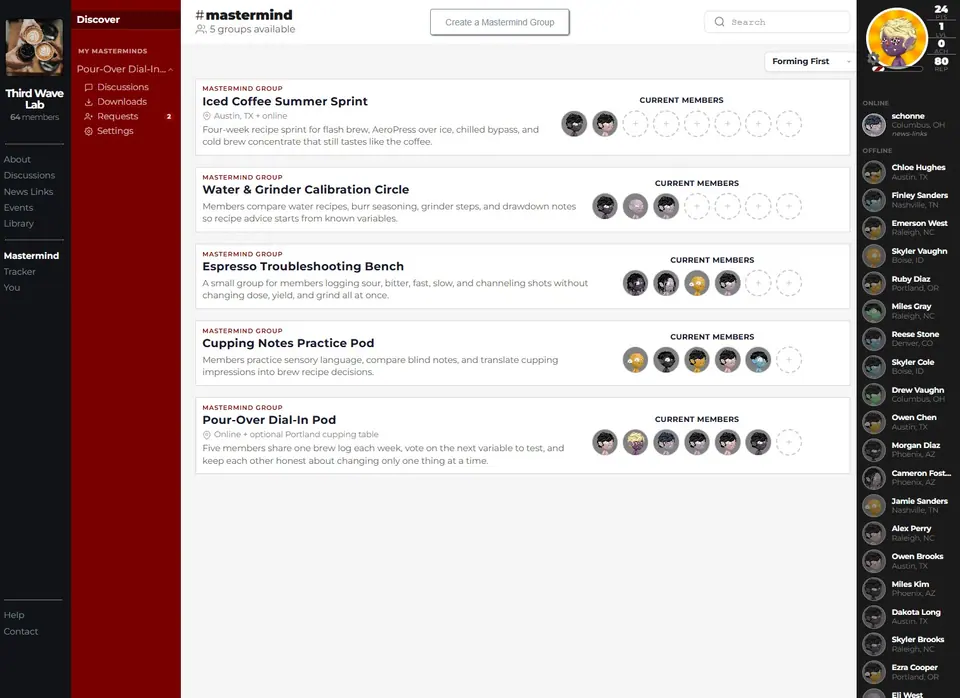
Discover groups, see open seats, request to join, organize smaller rooms, and keep serious peer work out of the public hallway.
-
Discovery Board: Members can browse available masterminds by focus, popularity, open seats, newest groups, or nearby groups.
-
Open Seats: Visible member slots make the group feel real before someone commits, which is better than "join our premium cohort" fog.
-
Request to Join: Prospective members can explain why they belong, and the group can vote before letting another personality into the room.
-
Group Tools: Private discussions, downloads, settings, requests, and voting give each mastermind its own operating surface.
Community fit
Why different Factory owners should care.
- Self-Help: Use masterminds for accountability pods, reset groups, confidence circles, goal reviews, and small rooms where members can be honest without posting their whole life to the main floor.
- Fan Club: Use them for street teams, superfan councils, release squads, theory rooms, collector groups, or local fan chapters that need coordination without swamping everyone else.
- Influencers and Celebrities: Use them for inner circles, ambassador squads, VIP clubs, launch teams, and trusted regulars who need more access without taking over the main room.
- Hobby or Maker: Use them for build teams, critique circles, challenge pods, supply-swap crews, project accountability, and tiny workshops where members actually finish the thing.
- Education and Coaching: Use them for study groups, capstone teams, tutoring pods, exam-prep circles, premium cohorts, and peer review rooms that need more focus than the general class chat.
- Professional Networks and Entrepreneurs: Use them for founder circles, referral pods, job-search cohorts, portfolio review groups, deal-flow rooms, and peer advisory tables where trust matters.
- Gaming (digital or physical): Use them for campaign parties, league squads, deck-testing groups, raid teams, rules committees, painting crews, and draft pods with clear membership.
- Wellness or Fitness: Use them for training squads, nutrition check-ins, recovery groups, challenge teams, form-review pods, and accountability crews that make skipping feel socially expensive.
- Local Community: Use them for neighborhood committees, volunteer teams, meetup crews, local chapters, planning groups, and the people trusted to handle the folding-table logistics.
- Cause or Nonprofit: Use them for campaign teams, donor circles, volunteer captains, grant-writing pods, advocacy groups, and field teams that need coordination without broadcasting every detail.
- Book or Media Club: Use them for spoiler rooms, writing circles, adaptation-watch crews, deep-dive groups, chapter accountability, and small debate tables for members who brought notes.
Factory Floor
Build the community people come back to.
Create a Factory now, or keep touring the machinery before you decide which lever to pull first.
Free forever. No credit card. No boring stuff.