
Retention Starts Before Anyone Joins
Members do not churn only because month three was boring. Many start leaving before they arrive because the promise was fuzzy, the fit was wrong, or the first step was hidden behind a decorative pile of enthusiasm. Treating retention as customer success means asking, "What result did this person buy, and how will we help them reach it?" before the checkout confetti has even finished falling.
This is why retention begins on the public page, the price page, the welcome message, and the first orientation. The factory should make the promise plain, name who belongs, show the first win, and explain how help works. A member who joins with the wrong expectation becomes a support problem with a login. A member who joins with a clear expectation becomes someone you can actually help.
Customer Success Is Not Babysitting
Customer success does not mean chasing every quiet member with a tiny emotional clipboard. It means building a system that helps members get the value they came for. The owner is watching for friction, not reading minds. The owner is creating paths, prompts, signals, and rescue loops, not carrying every member across the finish line like a sleepy backpack.
The distinction matters because community owners can confuse care with over-functioning. If success only happens when the owner notices every wobble personally, the model will snap as soon as the room grows. Good customer success makes the next right action visible, repeats it enough to be remembered, and uses data to decide who needs human attention.
Design The First Result
Time-to-first-result is the retention fuse. In a factory, the first result might be a completed profile, first post, feedback reply, practice clip, downloaded template, booked orientation, finished lesson, or one small public win. It should happen soon enough that the member can connect payment to progress before life wanders in wearing boots.
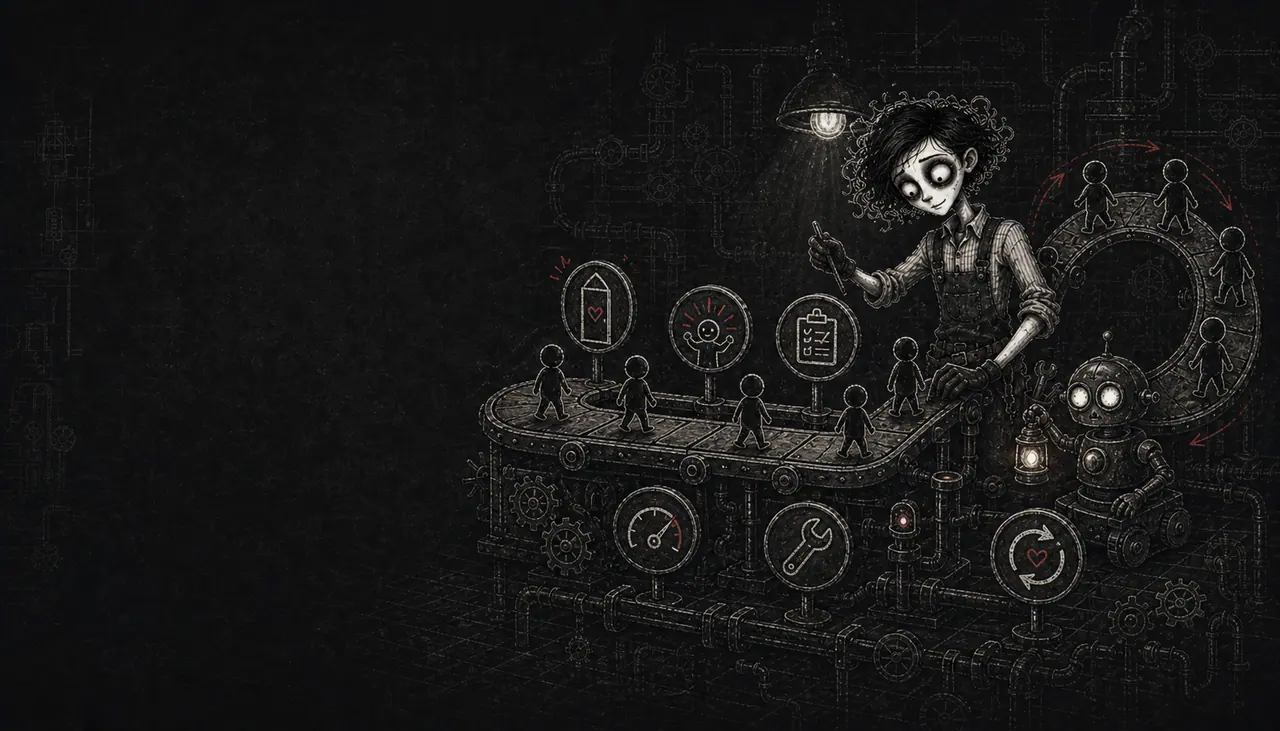
Write the first-result path as a tiny assembly line. Step one: confirm the goal. Step two: choose the starter lane. Step three: do one small action. Step four: get a reply, badge, point, or next-step prompt. Step five: know what comes next. If that line takes more than seven days for most members, the factory is asking motivation to do infrastructure work.
Use Health Signals, Not Vibes
Owners often say they can "feel" when a member is drifting. Sometimes they can. Sometimes they are just remembering the loudest three people and calling it analytics. Pick a few health signals that actually predict value: orientation attendance, first action, post or comment activity, lesson progress, event attendance, support questions, points earned, feedback received, wins posted, and days since last meaningful visit.
Keep the health model simple. Green means the member is moving. Yellow means they have stalled. Red means they are likely confused, disappointed, or gone in spirit. Do not build a dashboard cathedral before you can act on a sticky note. The useful test is whether a signal tells the owner what to do next. If the signal only produces a sad number and no action, it belongs in the museum of ornamental analytics.
Check In Before The Cancellation Mood
A check-in should not sound like, "Are you leaving us?" That sentence arrives wearing panic cologne. Check-ins work better when they are tied to member progress: "You joined for X. Did you complete the starter task?" "What blocked you this week?" "Want a nudge toward the next best thread?" The tone is service, not surveillance.
Set check-ins around lifecycle moments: day two if the member has not started, day seven after the first result window, day fourteen if they stalled after one action, before renewal, after missed events, and after a support issue. Most of these can be templated. The human part is reading the reply and routing the member to the right fix.
Treat Stalls As Product Clues
A stalled member is not automatically lazy. They may be confused, overwhelmed, embarrassed, under-supported, over-sold, or stuck at the same step where twenty other members quietly disappeared. Customer success turns stalls into clues. Which lesson stops people? Which prompt gets no replies? Which event has signups but no attendance? Which paid tier creates support questions that should have been answered before purchase?
Review stalls in batches. One member may have a personal issue. Ten members at the same point means the machine is pointing people into a wall. Fix the wall. Rename the step. Shorten the lesson. Add an example. Move the prompt. Turn a private answer into a public help thread. Retention improves when the factory learns faster than members quit.
Make Value Visible
Members do not always notice value while they are receiving it. A useful reply, saved thread, lesson completed, question answered, connection made, event attended, or small win can vanish into the week unless the factory reflects it back. Make progress visible with weekly recaps, member win threads, completion markers, saved answers, streaks, points, before-and-after posts, and "look what moved" summaries.
This is not vanity glitter. It is memory support. HBR retention economics reminds owners that keeping the right customers matters, but members still need to feel the reason to stay. If the value is real but invisible, renewal becomes a feelings quiz. Do not make members solve the mystery of whether the factory helped them.
Use The Community As The Success Team
The owner should not be the only source of progress. Peer support can create belonging, confidence, and practical movement, especially when members can see others wrestling the same problem. Build success rituals that make members useful to each other: welcome replies, critique windows, buddy check-ins, office-hour threads, win comments, resource shares, and "what worked for me" posts.
Set the pattern. Ask members to answer with context, share attempts, celebrate specific progress, and point people to the next step. A room where members help each other is not just more active. It is more resilient. The owner can stop being the only bridge across every puddle, which is excellent because owners are rarely engineered as bridge infrastructure.
Create Save Paths, Not Guilt Paths
When a member is drifting, the goal is not to guilt them into one more month. The goal is to diagnose fit and offer the next best path. Maybe they need a restart checklist, lower tier, pause option, office hour, beginner lane, private support ticket, refund, or clean exit. A good save path protects trust even when the member leaves.
This is where customer effort matters. If getting help, pausing, downgrading, or finding the right next step feels like crawling through vents, the member will remember the friction more than the value. Make the support path easy. Make the policy clear. Make the next step honest. Retention built on trapdoors is just churn with worse reviews.
Win Back With Specific Memory
Reactivation is part of retention. Not every quiet member is lost forever. Some left because the timing was bad, the goal changed, or they missed the moment when the factory became useful for them again. Do not send vague "we miss you" fog. Send useful memory: what they joined for, what changed, what is easier now, and what small step would restart momentum.
A reactivation message might say: "You joined during the first offer sprint. We now have a weekly teardown thread and a replay path for the setup lessons. If you want to restart, post one draft here by Friday." That is better than "Come back, exciting things are happening," which sounds like a flyer taped to a vending machine.
Run A Monthly Customer Success Review
Once a month, review member success like an operating system. Pull new joins, first actions, first results, stalled members, support themes, event attendance, lesson completion, refunds, pauses, cancellations, saves, wins, and reactivations. Then ask one brutal little question: where did members fail to reach value, and what can the factory change next week?
Keep the review small enough to repeat. Choose one fix. Better onboarding email. Shorter first lesson. Clearer support form. One check-in trigger. One win recap. One reactivation note. Write the change down so next month reviews behavior, not memory theater. Retention is rarely saved by a giant heroic overhaul. It is saved by steady repairs to the moments where value leaks out of the pipes.
Keep The Right Members Longer
Retention is not keeping everyone forever. Some members are wrong-fit, done-for-now, beyond the scope, or better served by leaving cleanly. The goal is to keep the right members longer because they keep getting value, contributing to the room, and trusting the owner. Healthy retention is not a cage. It is a well-run workshop people keep choosing.
That changes the owner mindset. Churn is not only failure. It is feedback. Renewals are not only money. They are proof that value continued. Quiet members are not insults. They are signals. Treat retention as customer success and the factory stops waiting for cancellations to announce problems. It starts catching the small leaks while the lights are still on.
Traps That Make This Weird
- Treating retention as a cancellation-save script instead of a lifecycle system.
- Measuring active members without defining what healthy member progress looks like.
- Building complex health scores before the owner has simple actions for green, yellow, and red members.
- Making check-ins sound like surveillance or guilt instead of useful help.
- Blaming members for stalls that the onboarding path, lessons, or support labels created.
- Hiding value so members must remember every useful thing the factory did for them.
- Using discounts to save poor-fit members instead of diagnosing whether they reached value.
- Letting the owner become the only customer-success engine in the room.
- Trying to retain everyone, including members who are wrong-fit or finished for now.
- Reviewing churn numbers without reading the support questions, stalled steps, and member language behind them.
Implementation Checklist
- Write the core result members are supposed to reach in the first 7 to 14 days.
- Map the first-result path from checkout to first visible progress.
- Choose 5 to 8 health signals that indicate movement, stall, or risk.
- Define green, yellow, and red member states with one action for each.
- Create check-in triggers for no first action, missed event, stalled progress, renewal, and support issue.
- Review the most common stall point and fix the step, label, lesson, or prompt causing friction.
- Publish weekly value signals: wins, answered questions, useful threads, shipped work, and next steps.
- Create save paths for restart, pause, downgrade, support, refund, and clean exit.
- Write one reactivation message based on member goal and recent factory improvements.
- Run a monthly customer-success review and ship one retention repair the following week.
Success Metrics
- More new members complete the first meaningful action within 7 days.
- Time-to-first-result decreases without increasing owner support load.
- Yellow-risk members receive useful check-ins before they cancel or disappear.
- Stalled-step fixes reduce repeated support questions and repeated drop-off points.
- Members can name recent value they received from the factory.
- Peer replies, wins, and support loops reduce dependence on owner-only attention.
- Pause, downgrade, and restart paths preserve trust even when members change pace.
- Retention improves for right-fit members while refunds and clean exits remain honest.
Failure Metrics
- Members pay, browse, and leave without completing a first result.
- Cancellation reasons repeatedly mention confusion, lack of use, lack of time, or unclear value.
- The owner only notices risk when a member asks to cancel.
- Health scoring creates reports but no specific member actions.
- Check-ins produce guilt, silence, or complaints instead of replies and movement.
- The same onboarding or lesson step keeps producing support questions.
- Members say the factory is nice but cannot explain why they should keep paying.
- Discounts save revenue temporarily while engagement and trust keep falling.