
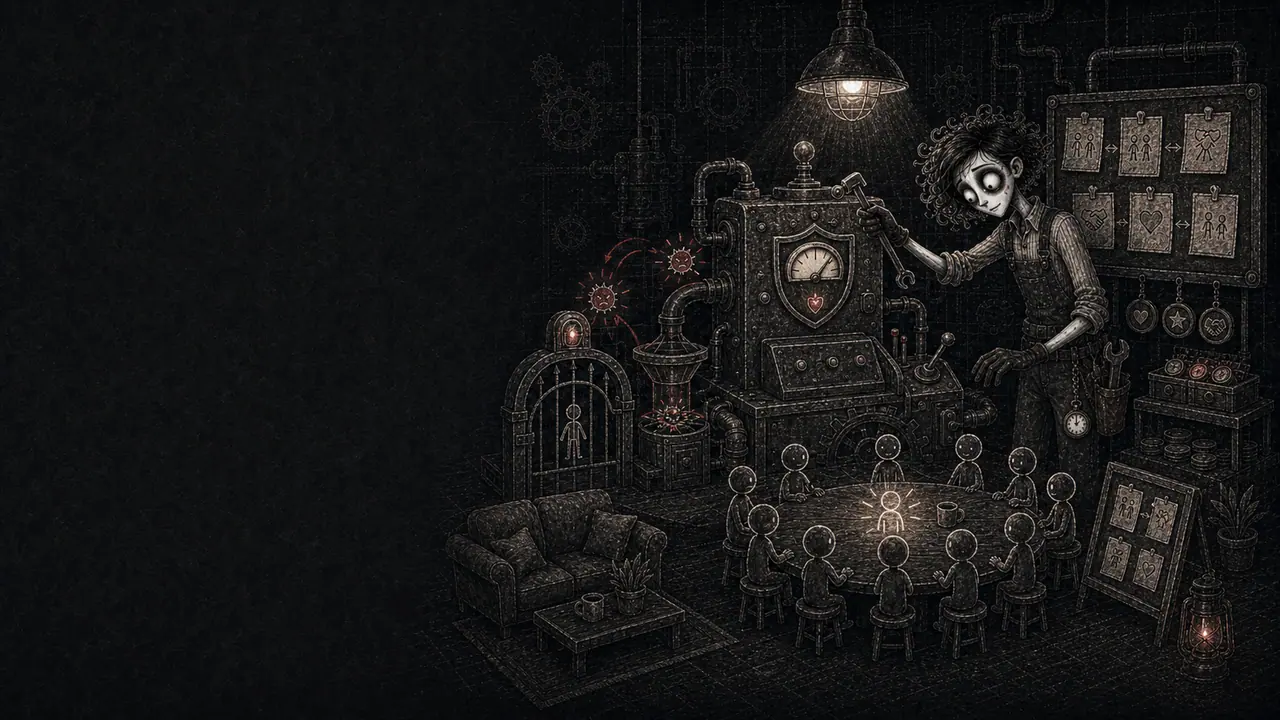
Culture Is What Gets Repeated
Culture is not the About page. Culture is what members see getting repeated, rewarded, ignored, corrected, quoted, pinned, praised, and quietly allowed. If a beginner asks a basic question and gets patient help, that teaches the room. If someone drops a lazy complaint and gets ten replies, that teaches the room too. The factory is always training itself, even on days when the owner is pretending not to check notifications.
The useful move is to treat culture like maintenance, not rescue. You do not wait for smoke before learning where the breaker box is. You decide which behaviors carry the promise, then make those behaviors easy to notice and copy. The goal is not a stiff rule museum. The goal is a room where members can tell, quickly and confidently, what belongs here.
Translate The Promise Into Behavior
Start with the factory promise and turn it into visible behavior. If the promise is "finish better songs with feedback from serious peers," then good culture means specific critique, shared work, respectful challenge, progress updates, and no drive-by self-promotion. If the promise is "a calm place for parents to build meal routines," then good culture means practical examples, no shame spirals, clear tags, and replies that reduce overwhelm.
Write a short behavior map with three columns: what we reward, what we redirect, and what we remove. Rewarding might include useful examples, generous answers, progress logs, clean questions, or member-to-member help. Redirecting might include vague venting, repeated off-topic debates, or advice that outruns the question. Removing is reserved for behavior that damages safety, trust, privacy, or the basic purpose of the room.
Make Good Examples Easy To Copy
Members copy faster than they read. A pinned rule that says "be helpful" is fine, but a pinned thread showing three excellent answers is better. Post examples of great intros, great questions, great critique, great wins, great disagreement, great resource sharing, and great requests for help. This gives new members a pattern to imitate instead of asking them to decode the house style by wandering around with a flashlight.
Use labels that sound like the factory, not corporate training. "Worktable Examples," "Good Shop Talk," "How We Ask For Help," or "Feedback That Actually Builds Something" all teach while keeping the brand alive. Refresh examples monthly. If the same pinned post sits untouched for a year, members learn that culture is a poster, not a practice. Fresh examples say: this is how the room works now.
Reward The Floor, Not The Noise
Every reward system has a bias. If points, badges, shout-outs, and algorithmic placement reward raw volume, you will get volume wearing a fake mustache and calling itself engagement. Reward behavior that improves the factory floor: thoughtful answers, completed steps, member support, practical examples, reported wins, clean questions, and follow-through after events. The loudest member is not automatically the most valuable member.
This matters because visible rewards become instructions. When a member sees a careful answer get thanked, boosted, and referenced later, they learn the standard. When a half-useful hot take gets the most attention, that becomes the new unofficial sport. Build rewards around contribution quality and promise movement. The room should ask, "Did this help the member move?" before it asks, "Did this get a lot of reactions?"
Use Replies As Steering Wheels
The owners replies are steering wheels. A simple public response can aim the next hundred posts. When someone asks a strong question, name exactly why it works: "This is easy to answer because you included the goal, what you tried, and where you got stuck." When someone gives useful feedback, point to the useful part. Members learn through the owners attention, especially in the early factory.
Steering also works for fuzzy behavior. You do not need to swing a hammer at every awkward post. Try warm redirects: "Good topic, but this belongs in the tool thread." "Can you add what you tried so members can help without guessing?" "Let us keep this thread focused on examples rather than debate." Public redirects should teach the room while preserving dignity when possible. Private messages are for nuance, patterns, and moments where public correction would become the show.
Put Norms Where Decisions Happen
Norms hidden in a terms page do not protect much. Put them where members are about to act: signup questions, welcome posts, Start Here lessons, channel descriptions, event invites, post composer hints, feedback templates, report flows, and moderator notes. The closer the norm sits to the behavior, the more useful it becomes. A tiny reminder beside the question box can do more than a giant constitution no one opens.
Keep norms short and operational. "Challenge ideas, not people." "Ask before giving intense advice." "Share your own example before recommending a paid tool." "Use the help template for blockers." "Do not DM members with offers unless they asked." These are not poetry. They are handles. Members should be able to grab them in the moment and know what to do next.
Make Boundaries Feel Like Hospitality
Boundaries can sound like a locked door when they are written late and angrily. Written early, they feel like directions to the right entrance. Tell members what each space is for, what kind of help belongs there, how intense feedback should be, when selling is welcome, and how to disagree without turning the thread into a pressure test. Clear boundaries reduce guesswork, and reduced guesswork is welcoming.
Use positive boundaries when possible. "Bring examples so people can help faster" lands better than "No vague questions." "Ask before giving harsh critique" lands better than "Do not be rude." The point is not to soften every rule until it becomes pudding. The point is to explain the behavior that protects the promise, then enforce it consistently enough that good members stop wondering whether the room has their back.
Create Soft Interventions
Healthy culture needs more than delete and ban. It needs soft interventions that catch drift early: move a post, rename a thread, ask for missing context, split a debate into a better channel, pause replies, DM a member, invite a rewrite, or add a moderator note. Soft interventions are boring on purpose. They keep tiny cracks from becoming recurring factory floor obstacles.
Make a simple response ladder for common moments. First time vague promo: public redirect plus the right place to share. Repeated promo: private warning with examples. Boundary push: clear owner reply and temporary limit if needed. Harmful behavior: remove and document. The ladder keeps the owner from improvising under stress, which is when most communities accidentally invent a policy shaped like last Tuesdays headache.
Watch For Culture Drift
Culture drift is usually quiet. Fewer beginners ask questions. Useful members reply less. A channel turns into the same debate every week. Event chats get polite but thin. Members start apologizing before posting normal questions. The owner feels tired before opening the app. None of these are dramatic, but together they are the smell of the machine running hot.
Schedule a monthly culture inspection. Read a sample of posts, replies, reports, support questions, event notes, churn reasons, and quiet-member feedback. Ask: what behavior is getting more visible? What behavior is getting quieter? Where are members hesitating? Which norms are unclear? Which rewards are misfiring? Then make one adjustment. Culture work gets heavy when owners save every adjustment for one heroic overhaul. Small monthly fixes are cheaper.
Let Members Carry The Standard
The owner should not be the only person who knows the standard. Give members language they can use without sounding deputized. A member can say, "Can you add what you tried?" or "This might fit better in the showcase thread" without turning into unofficial security. That kind of peer steering is culture taking root. It means the room has learned how to help itself.
Create lightweight rituals for carrying the standard: welcome buddies, feedback examples, monthly member spotlights, reusable reply templates, event table hosts, and a channel where members can nominate useful posts. Be careful with status, though. The goal is not to create a tiny class system of favored members. The goal is to make good behavior visible enough that many people can participate in protecting it.
Review Before You React
When something goes sideways, pause long enough to separate incident from pattern. One clumsy post may need a redirect. A repeated behavior may need a boundary. A harmful act may need removal. A confusing pileup may reveal that your prompt, channel, reward, or onboarding copy created the mess. Not every culture problem is a member problem. Sometimes the machine has a lever labeled "chaos" and the owner installed it with confidence.
After each meaningful intervention, write a tiny incident note: what happened, what promise it threatened, what action you took, and what upstream change would prevent the sequel. That note becomes training for future moderators and a sanity check for the owner. Protecting culture before it breaks is not about being severe. It is about being early, specific, consistent, and visibly on the side of the members who came for the promise.
Traps That Make This Weird
- Writing values that sound impressive but never showing members what those values look like in a real post, reply, event, or disagreement.
- Rewarding volume, heat, or speed while hoping quality will magically ride along in the passenger seat.
- Treating every correction like a public trial instead of using small redirects, private notes, and clean examples.
- Waiting for a perfect rulebook before correcting obvious drift.
- Letting the owner model the exact behavior the rules are supposed to prevent.
- Making private exceptions for high-status members until everyone learns the boundary is decorative.
- Building a permanent policy around one strange incident instead of looking for repeated patterns.
- Using points or badges in ways that incentivize shallow replies, copy-paste praise, or attention chasing.
- Hiding norms in onboarding while leaving post composers, event invites, and channel descriptions norm-free.
- Confusing a quiet room with a healthy room when good members may simply be hesitating.
Implementation Checklist
- Write the factory promise in one sentence and name the behaviors that protect it.
- Create a three-column culture map: reward, redirect, remove.
- Pin examples of excellent questions, answers, feedback, wins, and disagreements.
- Review points, badges, boosts, and shout-outs for accidental volume rewards.
- Add short norms beside the places where members post, reply, share, and attend.
- Prepare warm redirect language for common fuzzy behaviors.
- Create a response ladder for repeat issues before the next stressful moment.
- Run a monthly culture inspection using posts, reports, event notes, support questions, and churn reasons.
- Give members simple language for helping others follow the standard.
- Write a tiny incident note after meaningful interventions and use it to improve the upstream system.
Success Metrics
- New members copy useful examples without needing one-on-one explanation.
- Helpful questions, practical replies, and member-to-member support become more visible over time.
- Owner redirects are short, calm, and accepted because the norm is already visible.
- Reports and interventions identify patterns early instead of arriving after a public mess.
- Quiet members begin asking questions, attending events, or replying because the room feels predictable.
- High-contribution members stay active because the culture does not punish their effort.
- Moderators can explain decisions using the promise, examples, and response ladder.
- Rewards, badges, and shout-outs point members toward quality instead of raw volume.
Failure Metrics
- Members keep asking what belongs where because norms are hidden or too abstract.
- The same avoidable debates, promos, or low-context complaints return every week.
- Useful members stop replying while louder members set the room temperature.
- Owner corrections feel surprising because the standard was never made visible.
- Points, badges, or public praise correlate with shallow activity rather than meaningful contribution.
- Private exceptions for popular members become visible and damage trust.
- Moderation decisions require long explanations because no shared examples exist.
- The owner avoids opening the factory because every visit feels like emergency cleanup.