The Four Buckets Keep The Floor From Tilting
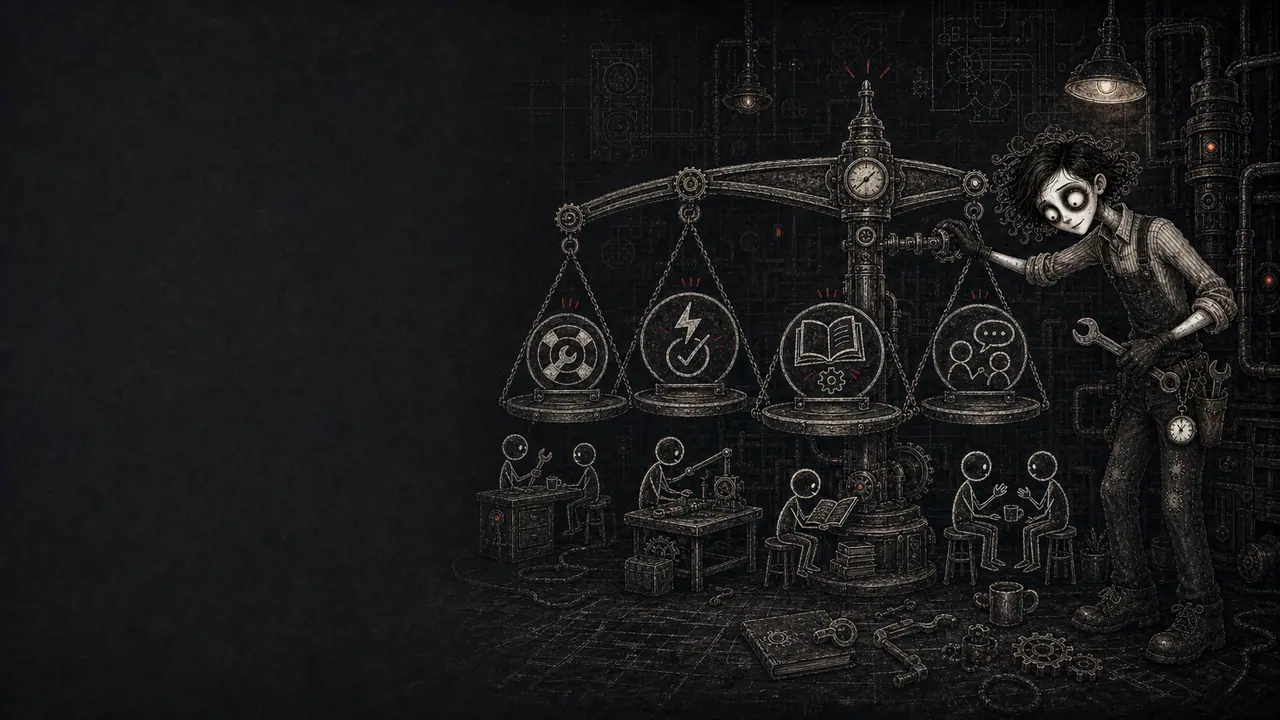
Every healthy factory delivers four kinds of value: help, action, learning, and connection. Help gets members unstuck. Action turns intention into visible movement. Learning gives people better tools and mental models. Connection makes the place feel worth returning to when nobody is actively stuck, shipping, or trying to remember which tab had the lesson open.
Most communities do one bucket naturally and accidentally neglect the others. Coaches over-help until the owner becomes a human fire extinguisher with calendar links. Course creators over-teach until the factory feels like a storage unit full of videos. Accountability people over-push until everyone needs a nap and a witness. Social-first communities over-connect until the room is warm, friendly, and wildly unclear about the result. Balance is the operating system.
Help Is The Unblocker
Help is what members need when friction gets too loud. It includes office hours, support threads, answer banks, coaching calls, examples, templates, critiques, and owner replies that point people toward the next useful move. Good help is specific. It asks what the member tried, where the attempt broke, and what decision is blocking progress. It does not turn the owner into a vending machine for free consulting snacks.
Help becomes dangerous when it becomes the whole product. If every member waits for the owner to diagnose every step, the factory turns into a help desk with better branding. Members learn dependence. The owner learns resentment. Nobody puts that in the sales page, mostly because "Join now and slowly drain my life force" has poor conversion.
Action Is The Engine
Action is the bucket that turns the factory from interesting into useful. It includes prompts, challenges, check-ins, assignments, implementation days, progress posts, shipping deadlines, practice reps, and small public commitments. Action gives members a reason to touch the product this week instead of admiring it from the emotional distance usually reserved for unused gym memberships.
Action works best when it is small enough to start and meaningful enough to matter. "Fix your whole brand" is a fog machine. "Post your one-sentence promise for feedback by Friday" is a handle. Implementation-intention research supports this very human truth: people act more reliably when the next move is concrete, scheduled, and attached to a situation. The factory should make action feel obvious, not heroic.
Learning Is The Upgrade
Learning gives members better eyes. It helps them understand why something works, what mistakes to avoid, which tradeoffs matter, and how to make decisions without poking every button in the machine. Lessons, workshops, guides, replays, swipe files, walkthroughs, and teardown notes all belong here. The best learning content changes behavior, not just vocabulary.
Learning gets bloated when it becomes the owner's comfort zone. Teaching is seductive because it feels productive, organized, and less awkward than asking members to do the thing. Then the factory fills with beautiful modules and suspiciously little movement. Effective learning research keeps giving the same annoying wink: practice, retrieval, feedback, and spaced repetition beat passive consumption. Members need to use the material before it fossilizes into "great training, will watch later."
Connection Is The Glue
Connection is the reason members return when the lesson is done and the support question is answered. It includes introductions, peer replies, buddy systems, small groups, member spotlights, event chat, wins threads, critique circles, shared rituals, and the quiet recognition that someone else is fighting the same tiny dragon. Humans are more likely to keep showing up where they feel seen.
Connection does not require nonstop chatter. In many factories, the best connection is purposeful: people meet around a shared goal, compare attempts, trade context, celebrate wins, and remember that the room contains actual humans instead of profile pictures with opinions. Peer-support research backs the value of belonging and emotional support, but the practical takeaway is simple: make members useful to each other without forcing everyone into a talent show.
Diagnose The Bucket You Overbuilt
Look at your factory and ask which bucket has the loudest machinery. If members ask endless questions but rarely ship, help is eating action. If members complete lessons but do not post attempts, learning is floating above behavior. If members chat all day while the promised result sits in the corner wearing a tiny party hat, connection is outrunning purpose. If members sprint through challenges and burn out, action needs help, learning, and recovery.
The easiest diagnosis is support load plus silence. Too many confused questions means help or learning is missing. Lots of content views with weak participation means action or connection is thin. Lots of friendly conversation with weak progress means the community needs sharper prompts. Lots of effort followed by churn means members may need feedback, pacing, or emotional glue. The dashboard will whisper if you stop yelling "engagement" at it.
Build A Weekly Four-Bucket Rhythm
A balanced factory does not need four giant programs. It needs a weekly rhythm where each bucket gets a turn. Monday can set the action prompt. Tuesday can share a short lesson or example. Wednesday can host a help thread or office hour. Thursday can ask for peer feedback. Friday can collect wins, stuck points, and next commitments. That is enough structure to make the room feel alive without requiring the owner to become a circus conductor with Wi-Fi.
Keep the rhythm predictable. Members should know when to ask, when to do, when to learn, and when to connect. Predictability lowers decision fatigue and makes participation easier for quiet members. They can lurk with a map, which is much better than lurking in a fog bank while the owner wonders why nobody is "engaging."
Route Features To Buckets
Every feature should have a bucket job. Discussions can create help, action, or connection depending on the prompt. Courses handle learning, but they can also trigger action if every lesson ends with a concrete assignment. Events can teach, unblock, connect, or create accountability. Rewards can reinforce action or contribution. Coaching can provide help, but it can also feed public examples back into the room with permission.
This is how you avoid feature soup. Before adding a new channel, event, download, badge, or challenge, name the bucket it strengthens. Then name the behavior it should create. "We need a video library" is a shopping impulse. "Members keep asking the same setup questions, so we need a short help resource before office hours" is a product decision. One of those builds a factory. The other builds a shelf.
Balance Changes By Member Stage
New members usually need more help and connection first. They need to know where to go, what counts, who is safe to ask, and how to get an early win without feeling like they have wandered into a private club through the loading dock. Growing members need more action and feedback. Advanced members need deeper learning, better peers, harder challenges, and fewer beginner speed bumps.
Paid members may need a different mix too. A free path might lean toward learning and connection to build trust. A paid path may lean harder into action, feedback, and direct help. The trick is to make the shift visible. People should understand that upgrading does not just unlock a bigger bucket of stuff. It changes the support mix around the outcome they came for.
Use The Bucket Question Before You Build
Before creating anything new, ask one annoying useful question: which bucket is this strengthening? A new course should strengthen learning and probably action. A live call might strengthen help, connection, or feedback. A challenge should strengthen action, with just enough help and learning to keep members from face-planting into the machinery. If you cannot name the bucket, the idea may be a shiny bolt rolling under the workbench.
This question also protects your calendar. Owners often solve every weird feeling with more work. Quiet week? Add a challenge. Confused members? Record a module. Low conversion? Host a webinar. Sometimes that is right. Sometimes the factory needs a clearer help lane, a warmer peer ritual, or a smaller next action. The bucket question keeps you from building a steam-powered solution to a loose screw.
Audit The Mix Monthly
Once a month, run a four-bucket audit. Count the last four weeks of prompts, lessons, support moments, events, wins, peer replies, and member actions. Then ask where the factory felt heavy, thin, frantic, or oddly quiet. This is less glamorous than announcing a huge new content drop, but huge new content drops are often what owners do when they are avoiding the real imbalance.
Pick one bucket to tune each month. Add a better help thread. Turn one lesson into a practice prompt. Add a peer feedback ritual. Cut one bloated resource. Create a clearer action checkpoint. The factory improves when the mix improves. Members do not need infinite everything. They need enough help to stay unblocked, enough action to move, enough learning to improve, and enough connection to care.
Traps That Make This Weird
- Calling every owner reply "community" when it is really a private help desk in public clothes.
- Adding more lessons because teaching feels easier than getting members to act.
- Using generic engagement prompts that create chatter without progress.
- Running accountability so hard that members associate the factory with guilt.
- Assuming quiet members do not value connection because they do not post constantly.
- Making paid membership mean more content instead of a better support mix.
- Letting one loud member type of need define the whole factory.
- Building features before naming the bucket and behavior they serve.
- Confusing a busy room with a useful room.
- Skipping monthly audits because the imbalance is uncomfortable to admit.
Implementation Checklist
- Write the promised result members joined to achieve.
- List every current feature, ritual, content type, and event under help, action, learning, or connection.
- Mark the bucket that is strongest and the bucket that is thinnest.
- Create one weekly rhythm that includes a prompt, a lesson, a help moment, and a connection moment.
- Add one action step to the end of every learning resource.
- Create one support lane that asks what the member tried before asking for help.
- Add one peer-to-peer ritual that connects members around attempts, wins, or blockers.
- Define how the bucket mix changes for new, active, advanced, free, and paid members.
- Run a monthly four-bucket audit and tune one bucket at a time.
Success Metrics
- Members ask more specific support questions because they have already tried a step.
- Lesson completion leads to visible actions, posts, submissions, or check-ins.
- Peer replies increase without the owner forcing every conversation.
- New members complete an early action and receive a useful response.
- Quiet members participate through polls, check-ins, downloads, or event attendance.
- Paid upgrades correlate with more implementation, feedback, or support use.
- Weekly activity spreads across help, action, learning, and connection.
- Members describe the factory as useful, clear, and worth returning to.
Failure Metrics
- The owner answers the same questions every week.
- Members watch content but rarely do anything with it.
- The room is friendly but progress is vague.
- Members start challenges and disappear after the initial burst.
- Paid members complain that they mostly received more material to sort through.
- Advanced members stop showing up because the mix is built only for beginners.
- Support load rises while member-to-member help stays flat.
- Engagement looks busy while retention, outcomes, or referrals stay weak.